Xwapseries.lat - Tharki Naukar Hot Uncut Short ... Best [UPDATED]
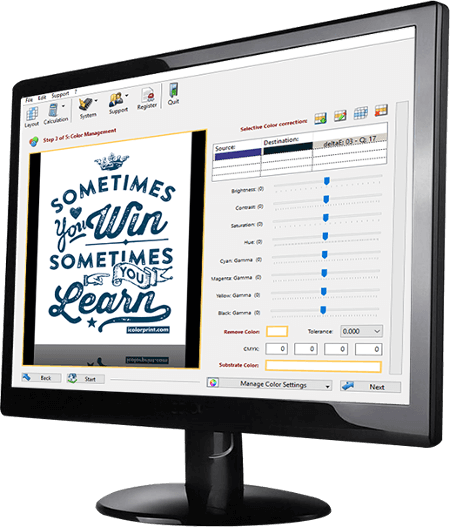
UNINET® has developed a series of software packages to enhance your IColor printing experience. The IColor® TransferRIP and ProRIP and ProRIP Essentials packages make it simple to produce spot color overprint and underprint in one pass. The Absolute White RIP helps you use an Absolute White Toner Cartridge in a converted CMYK printer, and create 2 pass prints with color and white. The IColor® SmartCUT suite allows your A4/Letter sized printer to produce tabloid or larger sized transfers! Use one or more with the IColor® 500, 600 and 800 series of transfer printers.
Use the IColor® ProRIP software to print white as an underprint or overprint in one pass.
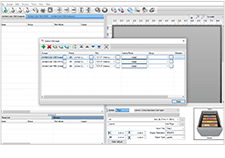
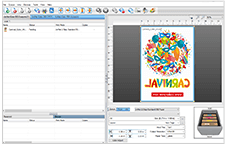
This professional version is designed for higher volume printing with an all new interface. Design files can be printed directly from your favorite graphics program, as well as imported directly into IColor® ProRIP. XWapseries.Lat - Tharki Naukar Hot Uncut Short ...
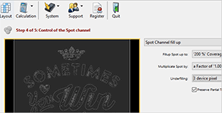
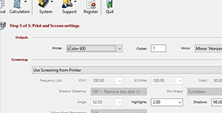
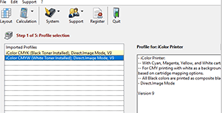
The IColor® ProRIP software allows the user to control the spot white channel feature. Three cartridge configurations are available: Spot color overprinting, where white is needed as a top color for textiles; Spot color underprinting for printing on dark or transparent media where white is needed as a background color and standard CMYK printing where a spot color is not needed. No need to create additional graphics with different color configurations – the software does it all – and in one pass! Enhance the brilliance of any graphic with white behind color! | Section | Main Points | Approx
Compatible with Microsoft Windows® 8 / 10 / 11 (x32 & x64) only. This unfiltered version not only amplifies the humor
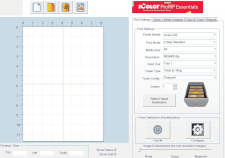
A simplified version of ProRIP which includes all of the most commonly used features of ProRIP with an easy to use interface. This Essentials version simplifies the printing process and allows the user to print efficiently and quickly without any training. All of the important and frequently used aspects of the software are included in this version, while all of the ‘never used’ or confusing aspects of the software are left out.
Comes standard with the IColor®540 and 560 models and is compatible with the IColor 550 as well.
Does not work with IColor 500, 600, 650 or 800 (yet).
Improvements over the ‘Standard’ ProRIP:
| Section | Main Points | Approx. Length | |---------|-------------|----------------| | Introduction | • Briefly introduce Tharki Naukar (genre, cultural context) • Explain why the “Hot Uncut Short” version is notable | 1‑2 paragraphs | | Plot Summary | • Concise overview of the storyline • Key characters and their motivations | 2‑3 paragraphs | | Themes & Motifs | • Exploration of desire, power dynamics, and satire • Use of humor and exaggeration to critique social norms | 2‑3 paragraphs | | Cinematic Techniques | • Editing style of the “uncut” version (long takes, pacing) • Soundtrack, lighting, and framing that heighten the “hot” tone | 2 paragraphs | | Cultural Impact | • Reception among Indian‑language audiences • Influence on later comedy‑drama shorts | 1‑2 paragraphs | | Conclusion | • Restate the film’s significance • Reflect on its lasting relevance | 1 paragraph | Sample Essay Introduction Tharki Naukar is a satirical short that blends slapstick comedy with a pointed commentary on sexual politics in contemporary Indian society. The “Hot Uncut Short” cut, released on XWapseries.Lat, removes the usual broadcast censorship, allowing the film’s risqué jokes and visual gags to play out in full force. This unfiltered version not only amplifies the humor but also sharpens the critique of how desire is commodified in everyday interactions.
The “Hot Uncut Short” version of Tharki Naukar succeeds not only as a comedic romp but also as a sharp social critique. By stripping away censorship, it exposes the underlying tensions of desire and power that pervade everyday life, leaving a lasting impression on both audiences and future creators.
The story follows Raj, a low‑level office clerk who moonlights as a “naukar” (servant) for a wealthy family. When the family’s matriarch, Mrs. Sharma, discovers Raj’s reputation as a “tharki” (lecher), she hires him to test the loyalty of her husband’s new business partner. Raj’s attempts to seduce the partner’s wife lead to a series of escalating misunderstandings, culminating in a chaotic dinner scene where secrets spill and alliances crumble. The uncut version retains several improvised lines and visual punch‑lines that were trimmed for broadcast, giving the narrative a raw, kinetic energy.
Since its release, the short has amassed over 2 million views on XWapseries.Lat, sparking lively discussions on social media about consent, workplace dynamics, and the role of censorship in Indian comedy. Its unapologetic tone has inspired a wave of indie creators to produce similarly bold, unfiltered content, signaling a shift toward more open dialogue in regional short‑form cinema.
The uncut edit employs longer takes during the dinner confrontation, allowing actors’ facial nuances to surface without the safety net of rapid cuts. This choice heightens tension and makes the humor feel more immediate. The soundtrack—a blend of traditional tabla beats with a modern synth bass—mirrors the clash between old‑world decorum and contemporary libertinism. Lighting shifts from warm, domestic tones in the early scenes to stark, high‑contrast illumination during the climax, visually reinforcing the moral “exposure” of the characters.
| Section | Main Points | Approx. Length | |---------|-------------|----------------| | Introduction | • Briefly introduce Tharki Naukar (genre, cultural context) • Explain why the “Hot Uncut Short” version is notable | 1‑2 paragraphs | | Plot Summary | • Concise overview of the storyline • Key characters and their motivations | 2‑3 paragraphs | | Themes & Motifs | • Exploration of desire, power dynamics, and satire • Use of humor and exaggeration to critique social norms | 2‑3 paragraphs | | Cinematic Techniques | • Editing style of the “uncut” version (long takes, pacing) • Soundtrack, lighting, and framing that heighten the “hot” tone | 2 paragraphs | | Cultural Impact | • Reception among Indian‑language audiences • Influence on later comedy‑drama shorts | 1‑2 paragraphs | | Conclusion | • Restate the film’s significance • Reflect on its lasting relevance | 1 paragraph | Sample Essay Introduction Tharki Naukar is a satirical short that blends slapstick comedy with a pointed commentary on sexual politics in contemporary Indian society. The “Hot Uncut Short” cut, released on XWapseries.Lat, removes the usual broadcast censorship, allowing the film’s risqué jokes and visual gags to play out in full force. This unfiltered version not only amplifies the humor but also sharpens the critique of how desire is commodified in everyday interactions.
The “Hot Uncut Short” version of Tharki Naukar succeeds not only as a comedic romp but also as a sharp social critique. By stripping away censorship, it exposes the underlying tensions of desire and power that pervade everyday life, leaving a lasting impression on both audiences and future creators.
The story follows Raj, a low‑level office clerk who moonlights as a “naukar” (servant) for a wealthy family. When the family’s matriarch, Mrs. Sharma, discovers Raj’s reputation as a “tharki” (lecher), she hires him to test the loyalty of her husband’s new business partner. Raj’s attempts to seduce the partner’s wife lead to a series of escalating misunderstandings, culminating in a chaotic dinner scene where secrets spill and alliances crumble. The uncut version retains several improvised lines and visual punch‑lines that were trimmed for broadcast, giving the narrative a raw, kinetic energy.
Since its release, the short has amassed over 2 million views on XWapseries.Lat, sparking lively discussions on social media about consent, workplace dynamics, and the role of censorship in Indian comedy. Its unapologetic tone has inspired a wave of indie creators to produce similarly bold, unfiltered content, signaling a shift toward more open dialogue in regional short‑form cinema.
The uncut edit employs longer takes during the dinner confrontation, allowing actors’ facial nuances to surface without the safety net of rapid cuts. This choice heightens tension and makes the humor feel more immediate. The soundtrack—a blend of traditional tabla beats with a modern synth bass—mirrors the clash between old‑world decorum and contemporary libertinism. Lighting shifts from warm, domestic tones in the early scenes to stark, high‑contrast illumination during the climax, visually reinforcing the moral “exposure” of the characters.
Use the IColor® TransferRIP software to print white as an underprint or overprint in one pass.
Designed for every day, short to mid run use, the IColor® TransferRIP software allows the user to control the spot white channel feature. Two cartridge configurations are available: White overprint, where white is needed as a top color for textiles; and white underprint for printing on dark or transparent media where white is needed a round color. No need to create additional graphics with different color configurations – the software does it all – and in one pass! Enhance the brilliance of any graphic with white behind color!
Compatible with Microsoft Windows 7 / 8 / 10 (x32 & x64) only.