Final Dev Letter & FAQ
2025-01-29
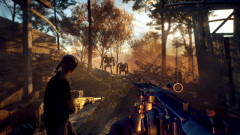
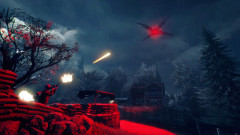
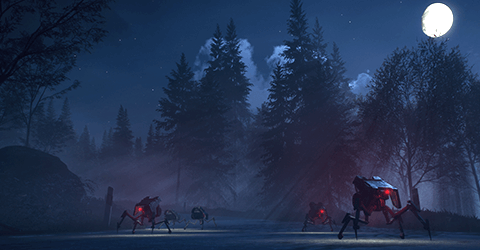
Explore a vast open world, rendered with the award-winning Apex engine, featuring a full day/night cycle with unpredictable weather, complex AI behavior, simulated ballistics, highly realistic acoustics, and a dynamic 1980’s soundtrack.
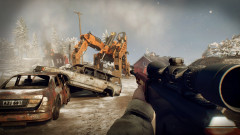
Experience an explosive game of cat and mouse set in a huge open world. In this reimagining of 1980’s Sweden, hostile machines have invaded the serene countryside, and you need to fight back while unravelling the mystery of what is really going on. By utilizing battle tested guerilla tactics, you’ll be able to lure, cripple, or destroy enemies in intense, creative sandbox skirmishes.
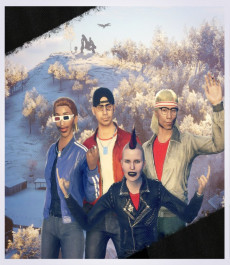
Go it alone, or team-up with up to three of your friends in seamless co-op multiplayer. Collaborate and combine your unique skills to take down enemies, support downed friends by reviving them, and share the loot after an enemy is defeated.
All enemies are persistently simulated in the world, and roam the landscape with intent and purpose. When you manage to destroy a specific enemy component, be it armor, weapons or sensory equipment, the damage is permanent. Enemies will bear those scars until you face them again, whether that is minutes, hours, or weeks later.
At times, the archive itself seemed to fight back. Corrupted files surfaced: a song that dissolved into white noise at precisely the moment a line might have explained motives; a photograph that lost contrast and left only silhouettes. Hackers claimed responsibility like pyrotechnicians taking credit for a disappearing act. Conspiracy forums assembled timelines that crisscrossed with the official record but led somewhere else entirely. In those margins, myths sprouted: that Ms Americana had staged the leak; that she had been silenced; that the .rar file was an invitation and a trap. Each myth performed a civic necessity: making sense of what refused to be simple.
The press turned the proceedings into a serialized parable about the modern impulse to curate pain. Morning shows treated the archive like entertainment between traffic updates. Longform journalists produced dossiers thick with footnotes and empathy, insisting that suffering—once public—demanded careful listening. Online, the discourse oscillated between tenderness and cruelty; commenters alternated between protective affection and merciless scrutiny. The trial of Ms Americana felt, to many, like a diagnostic test for a culture that was still learning what to do with its own reflections.
They found the file on a Tuesday, buried beneath a stack of downloads that smelled faintly of old coffee and colder decisions. The filename was an oddity—anachronistic, a relic of an era when people still appended ".rar" to everything as if compression could conceal meaning. Ms Americana was not the kind of subject to be compressed. She spilled out of folders and onto the desktop of the nation like an unsent letter, all the more urgent because it felt half-finished.
It was a peculiar kind of trial. There were no gavel bangs, only the persistent ping of notifications. Passionate op-eds argued that the archive was a mirror held to a country's seamier edges; others said it was vandalism, a trespass against intimacy dressed in virtue. Citizens debated whether truth required exposure or whether exposure required consent. The legal system, for its part, navigated a landscape where precedent lagged two steps behind technology, and where empathy was often reduced to a single paragraph on a state website.
Read the latest news from the Generation Zero development team.