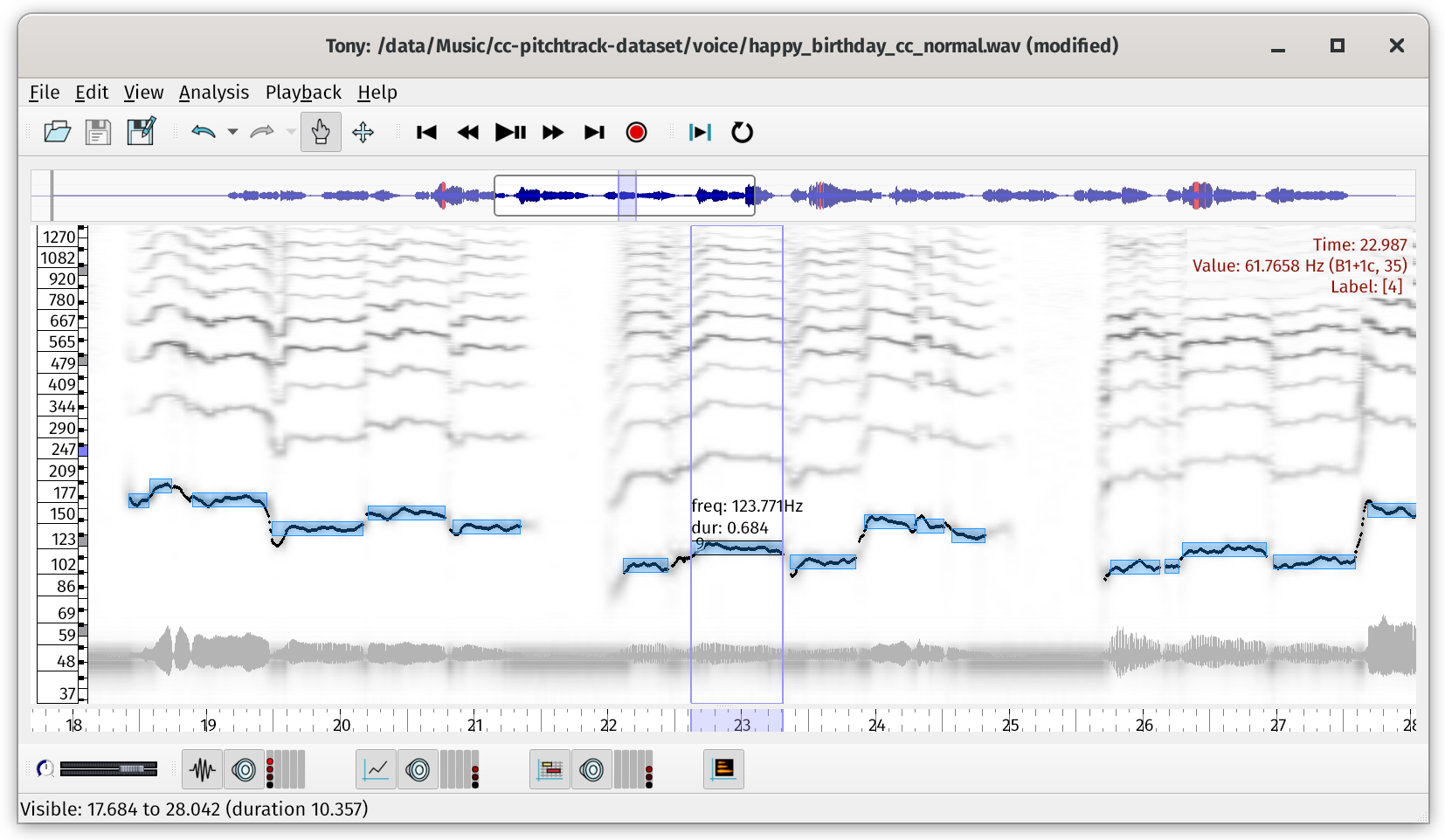
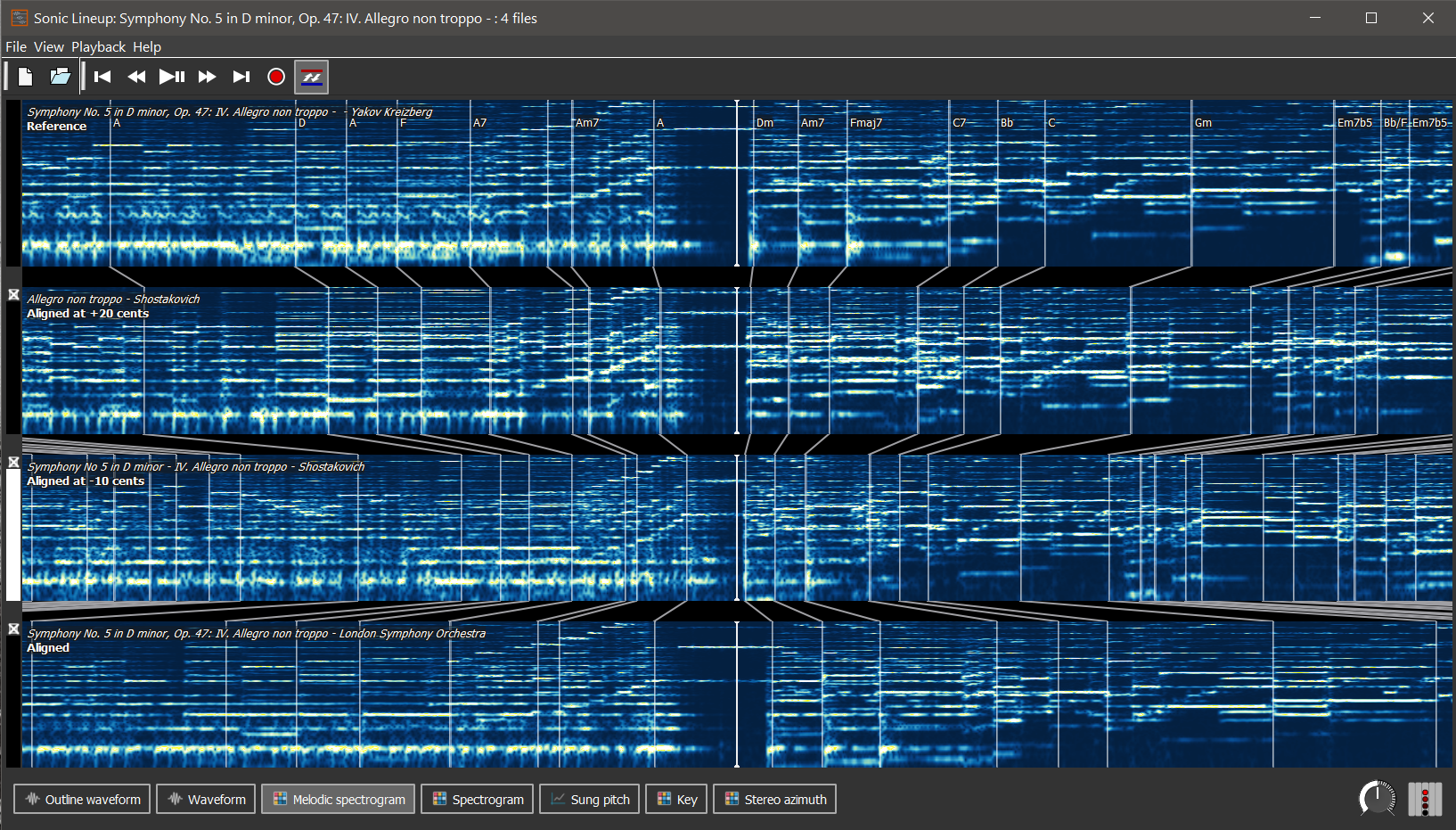
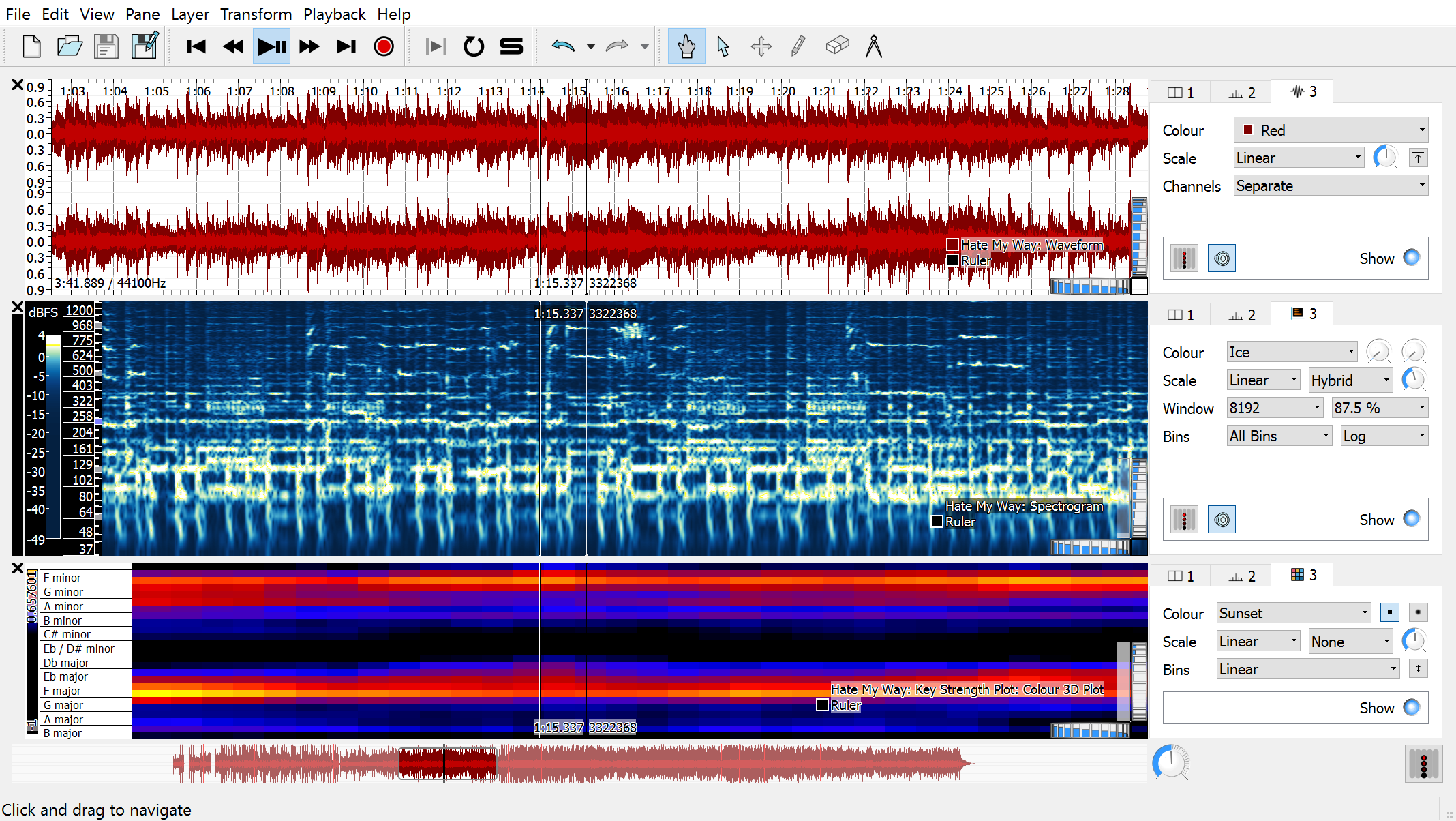
Sonic Visualiser is a free, open-source application for Windows, Linux, and Mac, designed to be the first program you reach for when want to study a music recording closely. It's designed for musicologists, archivists, signal-processing researchers, and anyone else looking for a friendly way to look at what lies inside the audio file.
Sonic Visualiser version 5.2.1 was released on 21 March 2025. Download it here!
Sonic Visualiser is one of a family of four applications:
Citations: If you are using Sonic Visualiser in research work for publication, please cite (pdf | bib) Chris Cannam, Christian Landone, and Mark Sandler, Sonic Visualiser: An Open Source Application for Viewing, Analysing, and Annotating Music Audio Files, in Proceedings of the ACM Multimedia 2010 International Conference.
For instance, if the weekly chart showed a strong uptrend, I would look for the daily chart to confirm this trend. If the daily chart showed a bullish trend, but with some volatility, I would then look at the 1-hour chart to see if it was providing any additional insights.
If you're interested in learning more about this approach, I recommend checking out Brian Shannon's book or online resources. With practice and patience, you can master the art of multiple timeframe analysis and take your trading to the next level. For instance, if the weekly chart showed a
That all changed when I stumbled upon a book by Brian Shannon, a well-known expert in the field of technical analysis. The book, which I'll refer to as "Technical Analysis Using Multiple Timeframes" (although I couldn't find an exact match, I assume it's similar to his book "Technical Analysis for the Rest of Us" or other works), introduced me to a powerful approach to analyzing markets using multiple timeframes. With practice and patience, you can master the
As I began to apply Shannon's approach to my own trading, I was amazed at how much more confident and accurate I became. I started by identifying the dominant trend on the longest timeframe (e.g. the weekly chart), and then worked my way down to shorter timeframes (e.g. daily, 1-hour, 30-minute) to look for confirmation or divergences. As I began to apply Shannon's approach to