

Book the showroom

Multi Year Finance available for UK Customers



Matthew Baynham
“The ease of pushing, turning and transferring into my car with such a light wheelchair was a breath of fresh air.”
4kg*. That’s a newborn baby. A 7 week old Labrador puppy. Your Tiga Sub4. By making 72 minute but fundamental changes to the Tiga, alterations that many would simply neglect to notice, we have made an obscenely alluring, pioneering lightweight wheelchair that is as rigid and stable as it is lightweight. Transferring, propelling, lifting, turning… All effortless with your Tiga Sub4.

*excluding wheels, cushion and any non-certified options.
By embracing marginal gains technology, the Tiga Sub4 has been created as an unparalleled ultra-lightweight wheelchair. A completely unique Sub4 upholstery, shortened axle and pin setup, specially designed froglegs super light castors and corrosion resistant titanium fasteners, the Tiga Sub4 is as smart as it is beautiful.
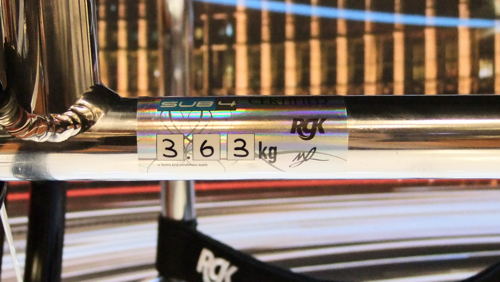
Only the best materials are used in your Tiga Sub4. Aluminium is famous for its strength, durability and is synonymous with lightness. The utmost best performance of your chair is ensured by only using elements produced by market leaders, alongside a staggering 19 quality checks throughout the build, from measure to handover.
Download the full Tiga Sub 4 user manual here





Do you need help with funding your RGK chair?
There are a few different ways in which you can try to get funding for your wheelchair. These choices include NHS Wheelchair Services, Access to Work and charities.
The "New Wave" movement in Malayalam cinema, which began in the 1980s, marked a significant shift in the industry's creative trajectory. Filmmakers like Adoor Gopalakrishnan, P. Padmarajan, and John Abraham experimented with new themes, narratives, and styles, pushing the boundaries of Malayalam cinema. Their films, such as "Swayamvaram" (1972), "Udyanapalakan" (1987), and "Mammootty's first film as a lead actor - "Ashrukavarsham" isn't well known still "Rathinirvedam" (1979) addressed complex social issues, explored human relationships, and showcased Kerala's cultural diversity.
In conclusion, Malayalam cinema is an integral part of Kerala's cultural identity, reflecting the state's values, traditions, and cultural heritage. The films have not only entertained the masses but also played a significant role in shaping and promoting Kerala's culture, both within India and globally. As the film industry continues to evolve, it is likely to remain a significant aspect of Kerala's cultural landscape, showcasing its rich heritage and progressive values to a wider audience. hot+mallu+reshma+hit+free
Moreover, Malayalam cinema has been instrumental in promoting Kerala's folk art forms, such as Kathakali, Koothu, and Theyyam. Films like "Kathakali" (1965) and "Thinnappavum Nikkahum" (1982) featured these art forms, introducing them to a wider audience and helping to preserve Kerala's cultural heritage. The films also showcased the state's traditional music, including Sopana Sangeetham and Kerala Pancham Sangeetham, which are an integral part of Kerala's cultural identity. The "New Wave" movement in Malayalam cinema, which
Malayalam cinema, also known as Mollywood, has been an integral part of Kerala's cultural landscape for over a century. The film industry has not only entertained the masses but also played a significant role in shaping and reflecting the state's culture, values, and identity. Kerala, known for its rich cultural heritage, lush green landscapes, and progressive society, has a unique cultural ethos that is intricately linked with its cinema. As the film industry continues to evolve, it
Malayalam cinema has also been known for its socially relevant themes, which often reflect Kerala's progressive and egalitarian values. Films like "Sneha Deepam" (1994) and "Gurukrishnan's Class" (1981) addressed issues like social inequality, education, and women's empowerment, highlighting the state's commitment to social justice and equality. The films often portrayed strong, independent female characters, showcasing Kerala's matriarchal traditions and the significant role women play in the state's society.
In addition to its cultural significance, Malayalam cinema has also been a major economic driver for the state. The film industry provides employment to thousands of people, including actors, technicians, and crew members. The industry also contributes significantly to the state's revenue, through taxes and other forms of earnings.

Units 8a/b/c Ring Road, Zone 2, Burntwood Business Park, Burntwood, Staffordshire, WS7 3JQ UK.
Part of the Sunrise Medical Group

Company No: 4685517 © RGK Wheelchairs 2024
Copyright © 2026 Southern Source
